
Stay planning
Camping vs glamping: which trip suits you?
Camping suits travelers who want control over gear and accept setup work.
Reviewed
The short answer
Camping suits travelers who want control over gear and accept setup work. Glamping suits people who value a prepared bed and shelter. Both need a weather plan, and neither label guarantees a private bathroom or warmth.
Guide sections 8
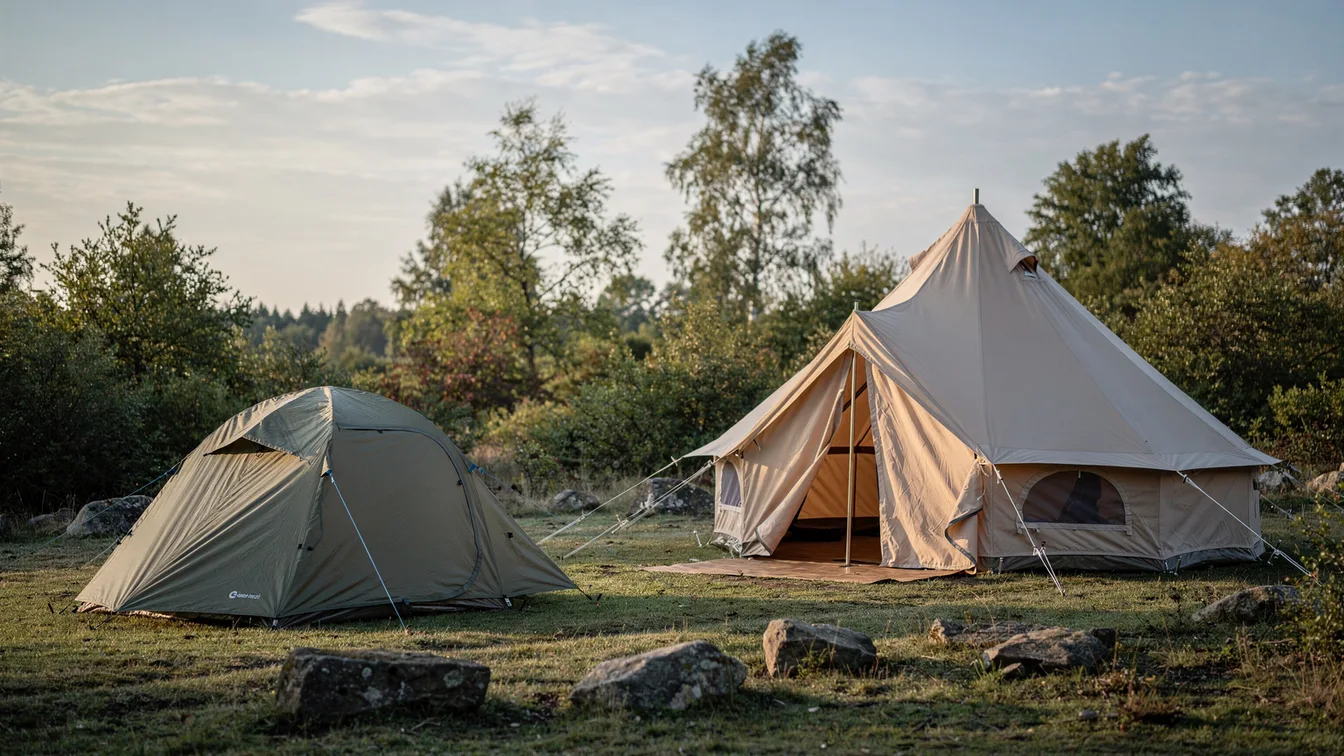
Camping vs glamping comes down to who supplies the shelter and how much comfort you want built in. With a typical camping trip, you bring and pitch your shelter. With a prepared glamping stay, the main stay is already there. Neither label tells you the full bathroom or cooking or weather setup.
Choose camping if you like control over the gear and do not mind the work. Choose glamping if you want to arrive at a ready place to sleep. Compare the exact package instead of assuming every furnished tent works like a hotel room.
Camping vs glamping: the shelter and setup
For camping, count every task needed before bed. You will choose a pitch, set up the tent, arrange the sleep system and pack it away again. If rain arrives during that process, you need a way to keep bedding dry and to dry the tent after returning home.
A furnished glamping tent removes much of that work. The host supplies the shell and the furnishings named in the room description. You still need to check arrival times, where to park and how far bags must be carried. A remote ready-made tent can involve more walking than a drive-up campsite.
Think about the first evening rather than just the view. If you expect to arrive late with children, a clear bed and bathroom plan may be worth more than extra space. If you enjoy setting camp and have time for it, doing the work yourself may be part of the trip.
Beds, bathrooms and the comfort gap
An ordinary tent lets you choose pads, sleeping bags or cots. You can change that system as your trips change. The useful measure is the space left after all sleeping places fit, rather than the maximum person count printed on the tent.
Glamping may supply a fixed bed and linens. Check every bed in a group unit, since extra sleeping places can differ from the main bed. A sofa bed or bunk or floor mat may be fine for one traveler and awkward for another.
The bathroom is often the clearest difference between two glamping options. Find out whether it is private, shared, attached or in another building. If you need hot water, check the shower setup too. Do not treat a toilet somewhere on the site as the same thing as an en suite bathroom.
What you still do for food and weather
A prepared room does not always include a kitchen. Ask which appliances and cookware, plus food-storage features are available. A restaurant nearby is only useful if its opening times fit your arrival. Keep a simple food plan for the first night rather than relying on a shop you have not checked.
Weather still reaches a fabric room. Ask about shade and ventilation, plus the exact heating or cooling gear. Power outlets and a fan do not show air conditioning. For cold nights, check what bedding is supplied and whether the heat runs while you sleep.
Keep fuel-burning devices out of an enclosed tent. Do not bring a grill inside to cook or warm up. Follow maker and site instructions for any heating system. A stove jack in a tent is one feature in a larger setup, not permission to improvise a heater.
Camping vs glamping costs over several trips
Camping can spread gear costs across many nights. But that only helps if you use the gear. Count the tent, sleep kit, campsite charge, food gear and travel. Borrowing suitable gear can make a first camping trip simpler than buying a full new setup.
Glamping shifts more of the cost into the booking. Compare the exact total for the room and dates, including extra people and minimum-night rules. A furnished tent with shared features may cost less than a cabin with a private bathroom. But no fixed price rule applies to every area.
For one short trip, paying for a prepared bed can save time and storage space. For repeated trips, owned gear gives you a different kind of value. The right choice depends on the trips you will take, not an assumed break-even figure.
Who should start with each option
Choose a basic campsite when you want to learn your own setup and have suitable gear. Keep the first route easy and practise pitching at home. A short dry trip with nearby features lets you work out the sleep and kitchen system before attempting a harder site.
Choose a prepared tent when you want the feel of sleeping outside without buying the shelter. Make the bathroom and climate setup your first checks. A clear description matters more than how many decorative items appear in the photos.
Choose a cabin when hard walls, a kitchen or a private bathroom are key. It can still support an outdoor trip. You do not need to choose the least shelter to make the holiday count.
Sources and date checks
- REI: choosing a camping tent: capacity and shelter-selection principles, not an exact model review.
- Florida State Parks: glamping stays: state-park glamping services and examples of amenities. Exact tent features vary.
- CDC: carbon monoxide prevention: fuel-burning devices must not be used in enclosed tents.
Source pages checked 14 October 2026. Access notes can change before your trip. Follow the linked agency or maker instructions for your dates.
FAQ
Does glamping always cost more than camping?
The booking for a furnished stay often includes more than a bare campsite. But a fair comparison also counts gear and extra charges. Check the total for your dates. For a single trip, renting a prepared shelter can avoid buying gear that you would otherwise use only once.
Which option is easier with children?
A prepared stay can remove tent setup and offer ready beds. But bathroom distance and barriers, plus the sleep layout matter too. A campsite near features may suit a family with familiar gear. Choose the option that makes the first evening and night manageable for the children traveling with you.
Verdict on Camping vs glamping
For camping vs glamping, choose between managing your own gear and paying for a prepared room. Camping suits travelers who want control over gear and accept setup work. Glamping suits people who value a prepared bed and shelter. Both need a weather plan, and neither label guarantees a private bathroom or warmth.
Build the rest of your trip
Use these routes to check the wider area or plan what to bring.