
Florida
Glamping in Tampa: River and Ranch Bases: a stay planning guide
For Tampa-area glamping, compare the exact river-park tent with a cabin-style alternative or your own-gear campsite.
Reviewed
The short answer
For Tampa-area glamping, compare the exact river-park tent with a cabin-style option or your own-gear campsite. Compare Timberline Hillsborough River Safari Tent, Timberline Oscar Scherer Safari Tent and Lake Louisa CareFree Luxury Tent. Check the exact dates and room type before booking.
Guide sections 16
- More stays to research
- Factors to consider when choosing glamping in Tampa
- Compare the exact beds and bathroom
- Cooling and screens are separate features
- Shade and shared outdoor areas
- Food and water for the first evening
- Read weather warnings and room terms separately
- Arrival, parking and access needs
- A fair total-price comparison
- Pack from the supplied-items list
- Build a river-park day around the camp
- Compare Tampa bases without losing the room details
- Use a dry arrival kit for the Tampa stay
- Sources and date checks
- FAQ
- Verdict on Glamping near Tampa
Ready to choose a stay? Compare the room types and booking details in our related guide.
Compare top glamping stays across the USGlamping near Tampa can put you beside river woodland rather than near the bay or main city. Hillsborough River State Park is a listed glamping setting in Florida State Parks details. Choose the exact room and route. Then compare how its features fit your night routine.
A furnished tent, a hard-walled room elsewhere in the area and an ordinary campsite are different packages. Use them as options for the same trip instead of assuming the word glamping creates one fixed comfort level.
More stays to research
These stays offer other ways to experience the area. Check the accommodation type and current facilities before planning around one.
Timberline Hillsborough River Safari Tent
A Hillsborough River tent is the closest match here for a Tampa trip with a woodland overnight. Map Thonotosassa to the city outing you want, and avoid treating the campground as a main hotel.
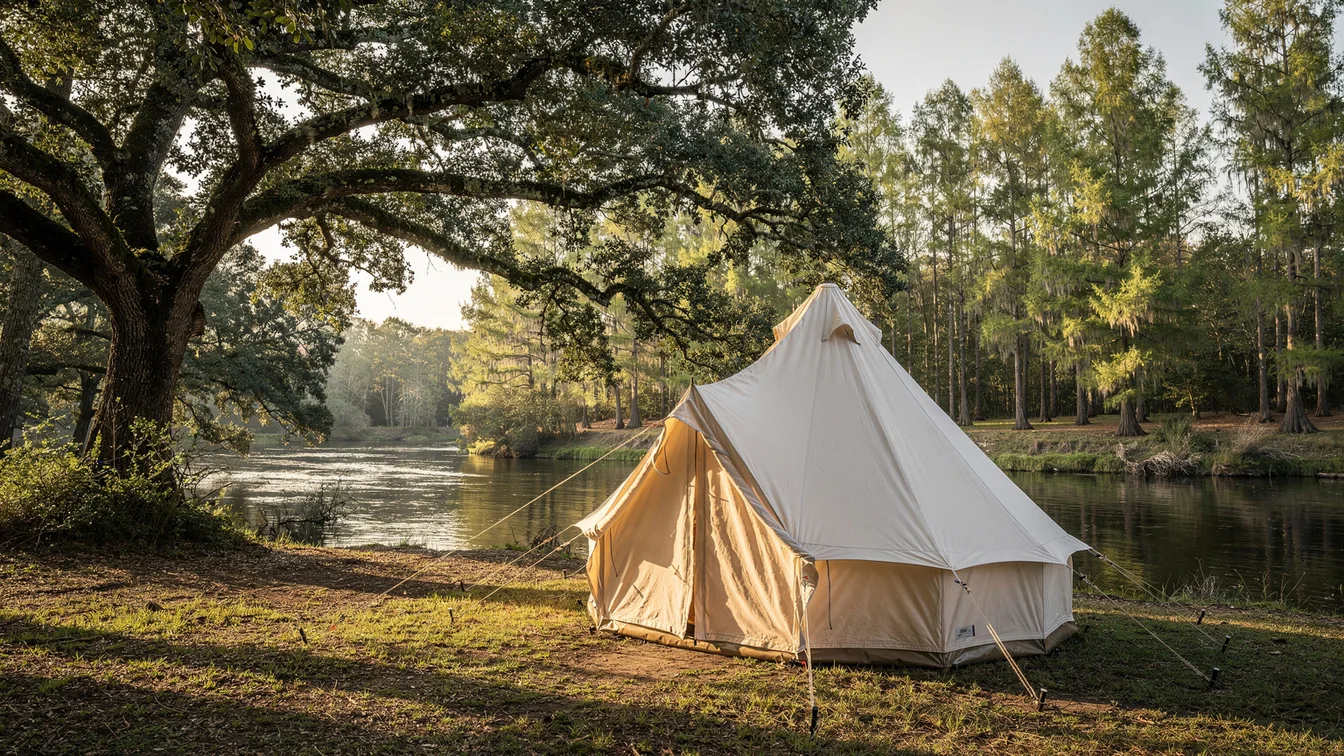
Timberline supplies beds, linens, cooling or heat, a mini-fridge and a coffee maker at Hillsborough River State Park. The booking page distinguishes Standard, Double and Deluxe Safari Tents. Pick by the actual bed layout. The park location is Thonotosassa, so this is a river-country base outside Tampa.
Thonotosassa is outside main Tampa; check bathroom distance.
Timberline Oscar Scherer Safari Tent
Oscar Scherer is the southern option for a stay led by Sarasota-area nature. It moves the trip away from Tampa, so choose it for its park setting rather than a daily return to the city.
At Oscar Scherer State Park, Timberline lists furnished safari tents with cooling and heat. Florida State Parks lists either two queen beds or a king bed with two sets of bunks, plus a mini-fridge and coffee maker. This site is in Osprey near Sarasota. It is a southward option outside Tampa, rather than a city stay.
Osprey is outside Tampa; select the exact tent and bathroom route.
Lake Louisa CareFree Luxury Tent
Clermont adds a different inland-lake route to this shortlist. It belongs on a wider Florida break, not a claim that every listed tent is minutes from Tampa. Check the full drive before choosing dates.
The CareFree Luxury type includes a furnished bell tent, a queen bed and air conditioning (AC). The host allows up to four people, using extra sleeping spaces for the larger party. Its Off-Grid Eco-Tent is a separate product with no AC. Choose the named luxury type if cooling is part of your plan.
Uses campground bathrooms; Clermont is outside Orlando.
Factors to consider when choosing glamping in Tampa
Decide what you want from the day before comparing rooms. A stay-led river park trip can keep travel simple. A base for city or bay outings should be judged on the exact road route to those places.
Put the entrance or outing location into the plan rather than using a main Tampa pin. A room described for the region may sit inland. Check arrival timing and the final approach for your departure day.
For a short break, choose fewer daily destinations. Time at the stay and one focused outing can be enough. Keep a lower-effort option in the same area if weather changes the original outing.
Compare the exact beds and bathroom
Count the exact sleeping places for the people traveling. Extra cots or sofa beds can offer different comfort from the main bed. Check bedding for every guest and room for bags without blocking the entrance.
Ask whether the bathroom is private, shared or in a separate building. Get the distance and surface, plus lighting when that matters. A bathroom assigned to the room is not always attached to it.
Keep those facts beside the quote. A lower total for a unit with an awkward night bathroom route may be a different product from the room you need. Choose the sleep and access needs before comparing extra extras.
Cooling and screens are separate features
Ask about installed AC if clear cool indoor space is required. A fan moves air, while open mesh allows airflow and can keep insects out when used as designed. Neither should be described as the same thing as AC.
Check how the room works during rain. Panels may need closing, and outside seating may become less useful. Check a dry place for wet clothing and any covered space included with the unit.
For a hotter or more humid forecast, choose a room whose exact features fit the group. A furnished tent available for booking is not a guarantee of comfort for every traveler in those conditions.
Shade and shared outdoor areas
Ask whether the room and seating are shaded through the afternoon, not only at the time shown in the gallery. Trees can help but do not show the exact sun pattern at the unit. A clear answer is more useful than a broad wooded description.
Check which outdoor areas are private. A picnic space or pool or common lawn in a site gallery may be shared. If quiet is important, ask about nearby rooms, shared paths and quiet-hour rules.
Choose privacy and features together. A more secluded room can add a longer bathroom or supply route. A developed camp can give clearer features while sharing more of the setting with others. Neither balance is always best.
Food and water for the first evening
Check drinking water and food-storage setups. Check whether the unit has a kitchen, refrigerator, shared cooking area or only basic gear. A ready tent does not always include a meal setup.
Plan a simple first dinner that fits the permitted features. Buy required items before a rural arrival, and keep any chilled food in suitable storage. Follow the site rules for cooking and food rather than a generic camping photo.
Do not bring a grill inside a tent to cook or keep warm. The CDC warns against fuel-burning devices in enclosed spaces. Use only the locations and gear allowed by the site and maker steps.
Read weather warnings and room terms separately
Use current National Weather Service details for the region and travel dates. Know how to receive updates during the stay. A furnished tent is an stay choice, not a promise of a severe-weather shelter.
Read the host's warning and closure, plus cancellation setups before payment. Keep those terms with the exact room type. A changed forecast or a canceled daytime outing may have a different effect from a site closure.
If the conditions no longer fit, use the written terms to check another date or a different room plan. Do not force an outdoor stay merely because its photographs looked comfortable when you booked.
Arrival, parking and access needs
Ask how close the car can get and whether you carry bags along a path. Raised platforms and steps, plus soft ground can affect access. A short distance is not enough details when a traveler needs a level route.
Check the check-in window and gate process. If you plan an evening out, know how to return. Keep directions saved for use without clear mobile data at the final approach.
Arrive with daylight when possible so you can settle the layout and bathroom route. The first evening is easier when food and luggage, plus sleep needs are already clear.
A fair total-price comparison
Use the same dates and party, plus required nights. Include taxes, cleaning, extra people and pet charges. Keep extra outing or gear packages separate so that they do not hide the basic room total.
Compare the features alongside the amount. A cabin with a kitchen and indoor bathroom may reduce other trip work, while a tent may offer a setting you value more. A bare campsite needs gear that a ready room supplies.
We do not turn broad region prices into a nightly-rate promise. The useful figure comes from the exact date-and-room quote. Keep the room type and terms with the total before deciding.
Pack from the supplied-items list
Bring personal layers, rain items and a light for paths after checking the forecast. Read the room inventory before adding bedding or towels or kitchen gear. A smaller bag is easier to carry and leaves more usable tent space.
Keep a dry set of sleep clothes separate from outdoor gear. A lake or river outing can leave shoes and clothing damp. Ask where items can dry without spreading wet gear around the bed.
If you choose an ordinary campsite, bring the full shelter and sleep setup. Practise that setup before departure. A ready-room list and a personal-camping list should not be merged without checking what the booking actually supplies.
Build a river-park day around the camp
Choose the part of the park you want to use, then read its current visitor notes. A room near the river does not show access for every outing. Treat a walk, a paddle and time at a picnic area as separate plans. Use current park guidance for the outing you choose.
Leave the first day with room to learn the site. Find the bathroom and the supplied light controls. Check the route back from any shared space before it gets dark. Keep a dry set of clothes where you can reach it without moving the bedding. A wet day is easier to handle when the tent entrance remains clear.
Ask where food belongs. The room may have limited cold storage, or the site may have rules for shared cooking areas. Bring a simple meal that works with the gear actually supplied. Do not assume that a photo of a table includes a kitchen or fridge.
Make the next morning flexible. Start with one main outing close to camp. If weather changes it, choose another permitted park use rather than treating the room as a guaranteed ticket to the river. Follow closure signs and the current park advice.
Compare Tampa bases without losing the room details
A city-linked room, a river-park tent and an ordinary campsite solve different needs. Put each option in a short note with the same fields: supplied shelter, bed layout, bathroom path and installed cooling. Add the drive to your main outing and the total for your dates.
For the campsite, include the work and gear you bring. You need a shelter, sleep setup and a way to handle food and wet kit. A cheaper pitch can be good value when you own that gear. It is less simple when you must buy it all for one short stay.
For the furnished tent, ask which comforts are fixed in the room and which are add-ons. Check whether the sleeping surface suits each guest. A room for a group may mix bed types. Make sure there is space to walk between them and reach the door.
For a cabin-style stay, check whether the claimed indoor features apply to the exact unit. Hard walls alone do not tell you about a private bathroom or kitchen or cooling. Use the booking detail rather than the broad type name.
Keep weather terms beside the cost. Ask what happens if severe weather affects the site or the access road. Save the written reply and booking rules. Recheck local weather advice near departure and use the site's stated plan. A flexible booking and a useful backup can matter more than a lower headline rate.
Use a dry arrival kit for the Tampa stay
Keep one small bag ready for arrival. Include a personal light, a dry change and the room directions. Put it above the larger luggage so that you can reach it first. If rain starts during check-in, you can learn the room without soaking every bag.
Find a place for wet shoes before arranging the beds. Keep the doorway and bathroom path clear. Ask where larger wet items may sit or dry. A small fabric room is easier to use when damp gear does not spread across its sleeping area.
Check the supplied light and cooling controls while you have time. Read any steps left in the room, and ask the site if a control is unclear. Do not bring fuel-burning gear into the sleep space to solve a missing feature. Choose a room that already meets the group's needs.
Sources and date checks
- Timberline Hillsborough River Safari Tent accommodation details: named room features and booking category, checked 14 October 2026.
- Timberline Oscar Scherer Safari Tent accommodation details: named room features and booking category, checked 14 October 2026.
- Lake Louisa CareFree Luxury Tent accommodation details: named room features and booking category, checked 14 October 2026.
- Hillsborough River: experiences and amenities: camping and glamping categories. Verify current site details.
- Florida State Parks: glamping stays: state-park glamping services and examples of amenities. Exact tent features vary.
- What to Do Before the Tropical Storm or Hurricane: published visitor or product information.
- CDC: carbon monoxide prevention: fuel-burning devices must not be used in enclosed tents.
Source pages checked 14 October 2026. Access notes can change before your trip. Follow the linked agency or maker steps for your dates.
FAQ
Is a river-park tent close to every Tampa attraction?
Use the exact park and room position to check your planned road route. A wider Tampa label can describe an inland stay rather than a city or bay-side base. Choose the main outing first. Then compare distance and features. A room can serve a river-country break well without being near every city destination.
Are all three listed stays within Tampa?
No. Hillsborough River is at Thonotosassa outside main Tampa, Oscar Scherer is at Osprey near Sarasota, and Lake Louisa is at Clermont. The latter two suit a wider Florida trip. Compare their drives to your chosen Tampa outing before booking, since a furnished tent alone does not make a easy city base.
How do I choose a bed layout at Hillsborough River?
Use the named Standard, Double or Deluxe Safari Tent in Timberline's booking calendar, then read its guest limit and bed details. The Double listing shows two queen beds. Keep that type visible while entering all guests. A generic park photo or a vacant campsite is not evidence that the tent layout you want is available.
Verdict on Glamping near Tampa
For Tampa-area glamping, compare the exact river-park tent with a cabin-style option or your own-gear campsite. Compare Timberline Hillsborough River Safari Tent, Timberline Oscar Scherer Safari Tent and Lake Louisa CareFree Luxury Tent. Check the exact dates and room type before booking.
Build the rest of your trip
Use these routes to check the wider area or plan what to bring.