
White Duck Regatta Bell Tent Review: 13-Foot Fit and Care in 2026
As an Amazon Associate, this website earns from qualifying purchases.
Reviewed
The short answer
For the White Duck 13-foot Regatta bell tent, check the exact bed layout and full pitched space first. The maker lists a central pole, sewn-in groundsheet and screened openings, with kit weight varying by fabric option. Plan transport and drying, plus the permitted weather use before buying.
Guide sections 27
- White Duck 13-foot Regatta
- Pros and cons of the 13-foot Regatta
- White Duck Regatta bell tent: choose the exact size
- Camping capacity and glamping capacity mean different layouts
- The center pole affects the furniture plan
- Peak and sidewall height are separate fields
- Complete kit weight changes transport
- Groundsheet construction belongs in the model check
- Screens and vents give options, not a climate guarantee
- Fire treatment does not make a tent fireproof
- A stove jack is only one part of a specified setup
- Pitching needs more than the floor diameter
- Use the assembly instructions for the whole sequence
- Canvas care begins with a drying place
- Separate used outdoor gear from bedding
- Compare Avalon and B5PRO on exact fields
- Know what the tent purchase does not supply
- Check seller terms without inventing a warranty promise
- White Duck Regatta bell tent: who should choose this size
- Keep the manual with the packed tent
- Plan the space outside the Regatta floor
- Sources and date checks
- FAQ
- Verdict on White Duck Regatta bell tent
- How we picked the 13-foot model
- Alternatives to compare
- Our verdict on the White Duck Regatta

Our verdict:
Compact canvas
Choose the smaller canvas floor when three furnished sleeping places fit your layout.
View on Amazon- 13-foot floor diameter
- Sewn-in PE groundsheet
- Mesh on doors and windows
Keep in mind: The complete kit weighs 66 or 71 pounds, depending on fabric.
Product details checked October 2026
The White Duck Regatta bell tent comes in a range of sizes and options. So start with the exact model. This guide focuses on the maker's 13-foot listing, which separates a six-person camping capacity from a three-person glamping capacity. Those are maker categories rather than promises about your own bed layout.
The published features describe a canvas shelter with a central pole, sewn-in groundsheet and screened openings. Choose it by the complete pitch, bed setup and handling plan. We do not invent first-hand tests, ratings or a guaranteed weather result.
White Duck 13-foot Regatta
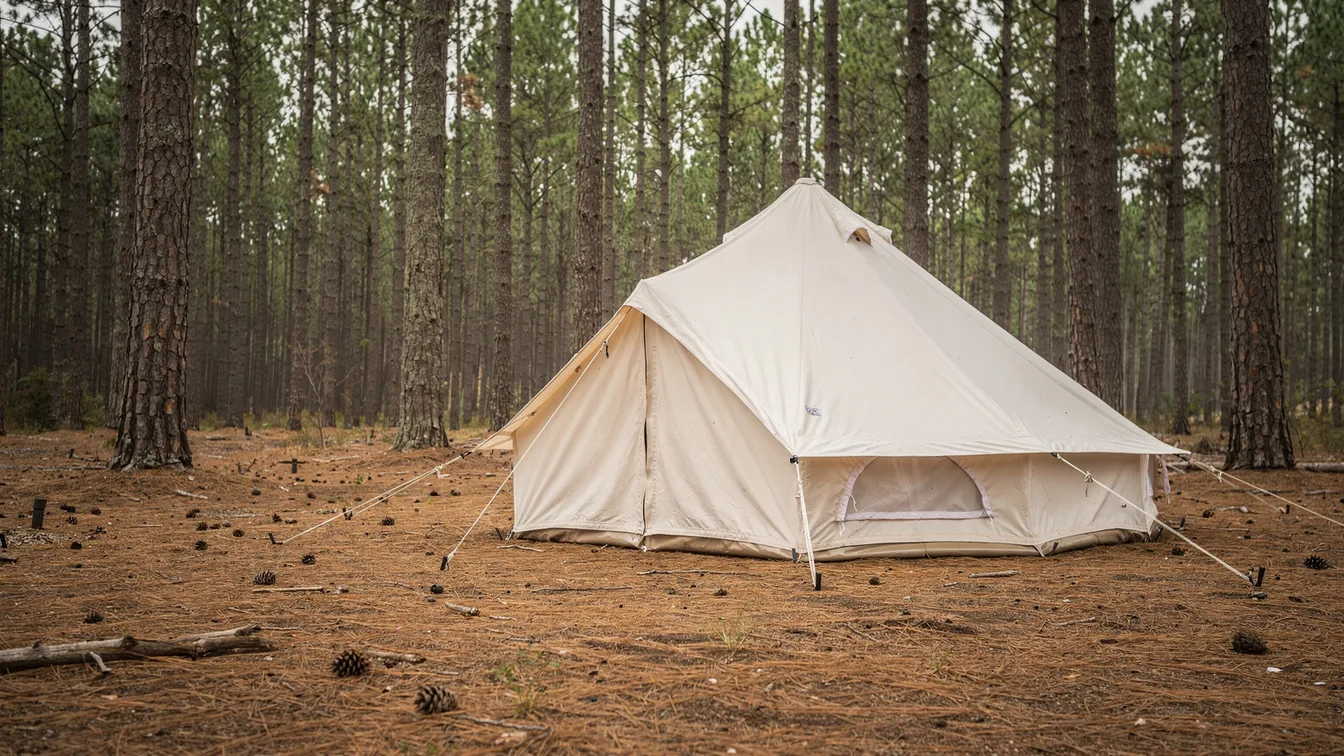
The 13-foot maker page lists a sewn-in PE groundsheet, a central pole and screened doors or windows. Its capacity descriptions differ between camping and glamping. Use that difference to plan the real sleeping area rather than choosing from the largest person number.
The maker lists complete-kit weights of 66 pounds for its water-repellent option and 71 pounds for its fire-and-water-repellent option. Keep those variant figures separate, and check the selected model's current specification before buying.
The room can be useful when you have enough space to pitch and carry, plus dry it. A smaller listed floor does not make the canvas package light or remove the central pole from the bed plan.
Pros and cons of the 13-foot Regatta
Pros
- The sewn-in groundsheet gives the sleeping area a defined floor.
- Screened openings provide ventilation options while keeping the panels closed to insects.
- The maker distinguishes furnished glamping capacity from a bare camping layout.
Cons
- The central pole takes space from the bed layout.
- A complete canvas kit needs transport space and a plan to dry it before storage.
- A stove jack is one feature, not a complete heating system or permission to use a stove.
White Duck Regatta bell tent: choose the exact size
Use the selected product's size and variant in every comparison. The Regatta range name can refer to more than one floor and package. Do not transfer the 13-foot figures in this guide to another size.
Check the current product details and assembly instructions before buying. Check which fabric option is selected and what the full kit includes. Keep those details with the room layout and transport plan.
An attractive gallery can show several sizes or setups. Match the image and specifications to the model you would order instead of treating the whole range as one product.
Camping capacity and glamping capacity mean different layouts
The maker distinguishes six-person camping capacity and three-person glamping capacity for this 13-foot page. Those labels show that a furnished setup takes space beyond tightly placed sleeping pads. They are not a substitute for measuring your own beds.
Draw the bed widths and lengths on the circular floor and mark the center pole. Add bags and leave a clear exit. If you use cots, check the height above them under the sloping wall as well.
Choose the number of sleeping places the exact layout can serve comfortably. A maximum count can be useful for sorting products, while the final decision needs a room plan for the people and gear you will use.
The center pole affects the furniture plan
Mark the pole as a fixed part of the room when drawing your beds. Leave usable paths around it and to the entrance. A circular floor can be broad while still making a large rectangular mattress awkward to position.
Try a layout with bags and personal lights as well as beds. Large chairs or storage pieces may need to stay outside in a permitted space rather than fill the remaining floor. Keep the night route simple.
A practice pitch can reveal which setup works before travel. That is a clearer test of fit than a photograph of an empty tent or a different size in the same range.
Peak and sidewall height are separate fields
Read the maker's listed peak and doorway, plus sidewall heights for the exact size. Each measurement answers a different task. A tall peak does not establish standing or sitting clearance at every bed position.
For a raised cot, place the sleeping surface in the exact wall slope. Check sitting up and entering that bed. Keep bedding clear of the tent fabric as the instructions require.
Use those checks before buying bulky furnishings. A smaller pad on the floor can leave a different amount of usable height from a high air mattress or cot. The best setup is the one that keeps the room functional at night.
Complete kit weight changes transport
The 13-foot page lists different complete-kit weights for the fabric options. Read the figure for the selected model and package rather than comparing a tent-body-only number from another seller. Poles, pegs and the floor are part of the handling task.
Check packed measurements against the vehicle and the luggage carry from parking. Keep the sleep kit and other essentials in that plan too. A canvas shelter can fit a car while still requiring a deliberate lift and storage setup.
Choose repeated-use gear you can manage before and after the trip. A large package may be more work than one short break needs, even when the inside room looks appealing.
Groundsheet construction belongs in the model check
The cited 13-foot listing describes a sewn-in PE groundsheet. That is a feature of this model description, not a reason to assume every Regatta size or canvas range uses the same floor setup. Check the exact product.
Follow the tent and bed instructions for floor contact. Cot feet and furniture, plus sharp objects can create concentrated pressure or wear. Use only setups and protection compatible with the shelter.
Keep the entrance routine clear so that used shoes and wet gear do not spread onto bedding. A floor is part of the room, while dry sleep still depends on how the gear is handled.
Screens and vents give options, not a climate guarantee
The maker lists screened openings and roof vents on the 13-foot page. Read the assembly and operating instructions for how those features should be used. An open-panel photo shows one setup rather than every weather condition.
Keep ventilation and rain protection as separate questions. Check the way panels close and how the tent is tensioned. A canvas description should not be converted into independent proof of performance in a storm.
Use the forecast for the exact site and follow the model's limits. If the planned conditions do not fit, choose another shelter or date instead of assuming a familiar tent shape makes the setup suitable.
Fire treatment does not make a tent fireproof
The maker names separate fabric treatments in its current product options. Read their meaning and limits in the exact instructions. A treatment label should not be turned into a guarantee that fabric cannot burn or that an open flame is safe anywhere nearby.
Follow site rules and the tent and device instructions. Keep exits clear, and do not improvise heating inside the sleep area. The CDC warns against fuel-burning cooking devices in enclosed spaces.
Choose the night warmth setup before travel. A cold forecast should not become a reason to add a device the tent or site does not permit. Shelter features and a complete heating system are different things.
A stove jack is only one part of a specified setup
The maker page lists a stove-jack feature. It does not include a complete stove setup or show that every camper can safely combine any stove and pipe with the tent. Check the current assembly and device instructions for a permitted system.
Read the campsite rules too. A private or public site may limit fire or fuel use regardless of a feature in the tent. Do not use the product gallery to decide permission.
For a simple first camp, choose a sleep system that suits the forecast without improvisation. A cabin or prepared heated room may be a more direct solution when that is the main need.
Pitching needs more than the floor diameter
Check the full pitched footprint in the current instructions, including guy lines. The circular floor measures the sleeping area, while the outside structure needs more space. Compare that complete setup with the campsite pad.
Choose a permitted pitch surface that fits the maker's needs. Do not select the shelter from diameter alone and hope the lines can be squeezed around obstacles. Leave a usable entrance and a route around the tent.
Practise the pitch before the first trip. That lets you check all parts and understand tensioning without a late arrival. It also shows the time and effort needed to set up the room.
Use the assembly instructions for the whole sequence
Keep the current model instructions with the gear. Check every required pole and peg, plus component before departure. Do not rely on memory from another bell tent or a video of a different size.
Try the full sequence at home where possible. Arrange the sleep kit after pitching and check the door path. Use that practice to settle bed placement and packed handling rather than making the first campsite arrival a fit experiment.
Arrive with daylight and a simple meal plan. A clear pitching routine can improve the evening more than extra decorative gear. Leave enough time to follow the instructions fully.
Canvas care begins with a drying place
Plan where the shelter will dry after travel. White Duck's care guidance stresses dry storage and a suitable storage environment. A wet canvas package should not remain closed until the next holiday.
Follow the exact product's cleaning and maintenance instructions. General synthetic-tent treatment should not be assumed right for this canvas. Use compatible products and the recommended sequence.
Keep the storage space in the purchase decision. A roomy canvas camp is easier to enjoy when drying and packing are manageable at home. If that work does not fit, a smaller shelter or prepared stay may be more useful.
Separate used outdoor gear from bedding
Keep wet layers and used shoes away from the sleep area. Choose a simple place near the entrance that leaves the exit open. Do not add large storage furniture before the bed plan is clear.
Check the personal lighting and bathroom routine for the campsite you use. The tent itself does not supply park or site features. A fabric room can be comfortable while still needing outdoor trips at night.
Bring only the items that serve those tasks. A smaller bag and a dry sleep change can make the room easier to handle than a large set of decorative furnishings.
Compare Avalon and B5PRO on exact fields
The other canvas models in our comparison have their own floor and ventilation, plus handling descriptions. Read the exact size and variant for each, rather than treating three bell-tent outlines as equivalent products.
Compare full pitched footprint, usable bed layout, kit weight and floor setup. Each field answers a different part of the trip. A larger floor may offer room while creating more vehicle and drying work.
Keep weather language tied to the product instructions. Maker marketing is not an independent test result. Choose the model whose listed features and handling suit the trips you expect to take.
Know what the tent purchase does not supply
The shelter kit and a complete furnished camp are different packages. Check the included list before assuming beds or linens or furniture or lighting come with the tent. A styled image can use accessories beyond the product itself.
Plan the full sleep and meal setup that remains. Choose a suitable surface and covering for the forecast, plus personal light and the permitted food setup. Keep vehicle and campsite space for those essentials.
If the aim is one short trial of canvas sleeping, a prepared stay may avoid buying the full kit. Owned gear makes more sense when you plan repeated camps and can manage its care.
Check seller terms without inventing a warranty promise
Read the current return and warranty, plus support terms for the exact seller and model. Do not transfer another retailer's window or a broad brand claim to your purchase. Keep the product identity with the record.
Check the included items and any selected fabric option before payment. Those facts can affect the price and kit weight. A lower displayed total for another size is a different product, not always better value.
Settle key fit and handling questions before ordering. A return policy should not become a substitute for measuring the beds and vehicle, plus campsite you intend to use.
White Duck Regatta bell tent: who should choose this size
Consider the 13-foot model when the verified floor layout, full pitch and handling fit your repeated car-camping plans. Keep its central pole and wall slope in view. A smaller canvas base can be useful without serving every group or bed setup.
Choose another size only after reading that model's own specifications. Do not extend the figures in this guide across the whole Regatta range. If transport or dry storage is difficult, compare a lighter shelter or a prepared room instead.
The useful choice is a complete camp you can set up, use and maintain. A roomy photo and a maximum capacity label are starting points. The exact bed and care plan settle the purchase.
Keep the manual with the packed tent
Save the instructions for the exact size and fabric variant you buy. Put a readable copy with the kit, along with the part list. Check the pegs and poles before leaving home. If a part is missing, resolve it before the trip rather than guessing at a substitute during the pitch.
Plan the space outside the Regatta floor
Include guy lines in the pitch plan. The floor size tells you where the room sits, but the complete shelter needs space around it. Use the exact model instructions to mark the pegs and lines. Do not use the advertised diameter as the whole campsite footprint.
Check how people will move past those lines. Put chairs and gear where guests can reach them without stepping through the pegged area. Keep the tent door and the route from it clear. If the pitch is too small, choose another permitted site rather than making up a new line pattern.
Do the same check at home when you trial the bed layout. Look at the packed kit and the full pitch together. This gives you a useful basis for choosing the tent size and site. It does not replace the maker's weather limits or assembly instructions.
Sources and date checks
White Duck: five-meter Avalon: larger cotton-canvas comparison; checked 16 October 2026.
DANCHEL: 16.4-foot B5PRO: five-meter alternative; checked 16 October 2026.
White Duck: 13-foot Regatta bell tent: exact 13-foot model features and weight and separate camping/glamping capacity. Maker claims labelled.
White Duck: bell-tent packing and storage: maker care guidance for dry, well-ventilated storage.
REI: choosing a camping tent: capacity and shelter-selection principles, not an exact model review.
CDC: carbon monoxide prevention: fuel-burning devices must not be used in enclosed tents.
Source pages checked 14 October 2026. Access notes can change before your trip. Follow the linked agency or maker instructions for your dates.
FAQ
Do the listed weights apply to every Regatta size?
The figures in this guide come from the current 13-foot maker page and its named fabric options. Other sizes or packages can differ. Check the exact model and complete-kit weight before comparing transport. A range name should not be used to transfer one size specification to another.
Does the six-person camping capacity mean six furnished beds fit?
The maker separately lists a three-person glamping capacity for this size. Those categories show that furnishing changes usable space. But your own layout still decides fit. Mark every bed, the central pole and bags, plus exit on the floor plan. Check height above raised beds before choosing the maximum number of sleepers.
Is the stove-jack feature a complete heating system?
It is one shelter feature, not a complete stove and pipe setup or permission for unrestricted fuel use. Check the current tent and device instructions and site rules. Keep fuel-burning cooking devices out of enclosed sleeping spaces. Choose a suitable sleep and warmth setup before traveling rather than improvising at camp.
Verdict on White Duck Regatta bell tent
For the White Duck 13-foot Regatta bell tent, check the exact bed layout and full pitched space first. The maker lists a central pole, sewn-in groundsheet and screened openings, with kit weight varying by fabric option. Plan transport and drying, plus the permitted weather use before buying.
How we picked the 13-foot model
We compared the maker's published 13-foot specifications with the verified Amazon product identity and the needs of a furnished camp. This is a specification-based review; we have not pitched or weather-tested the tent. Our verdict weighs floor layout, transport and drying work rather than assigning a test score.
Alternatives to compare
Use our bell canvas tent comparison to weigh other verified tent options. For a wider shelter choice, compare the glamping tent picks. Each roundup sets out who the tents suit and the practical trade-offs.
Our verdict on the White Duck Regatta
The 13-foot Regatta suits a camper who has room for a full canvas pitch and can carry and dry the complete kit. Choose it for the floor layout and screened openings, after checking the exact model. For a light setup or a small campsite pad, compare the alternatives before buying.
Build the rest of your trip
Use these routes to check the wider area or plan what to bring.