
3 Glamping bed choices: pad, cot or air mattress in 2026
As an Amazon Associate, this website earns from qualifying purchases.
Reviewed
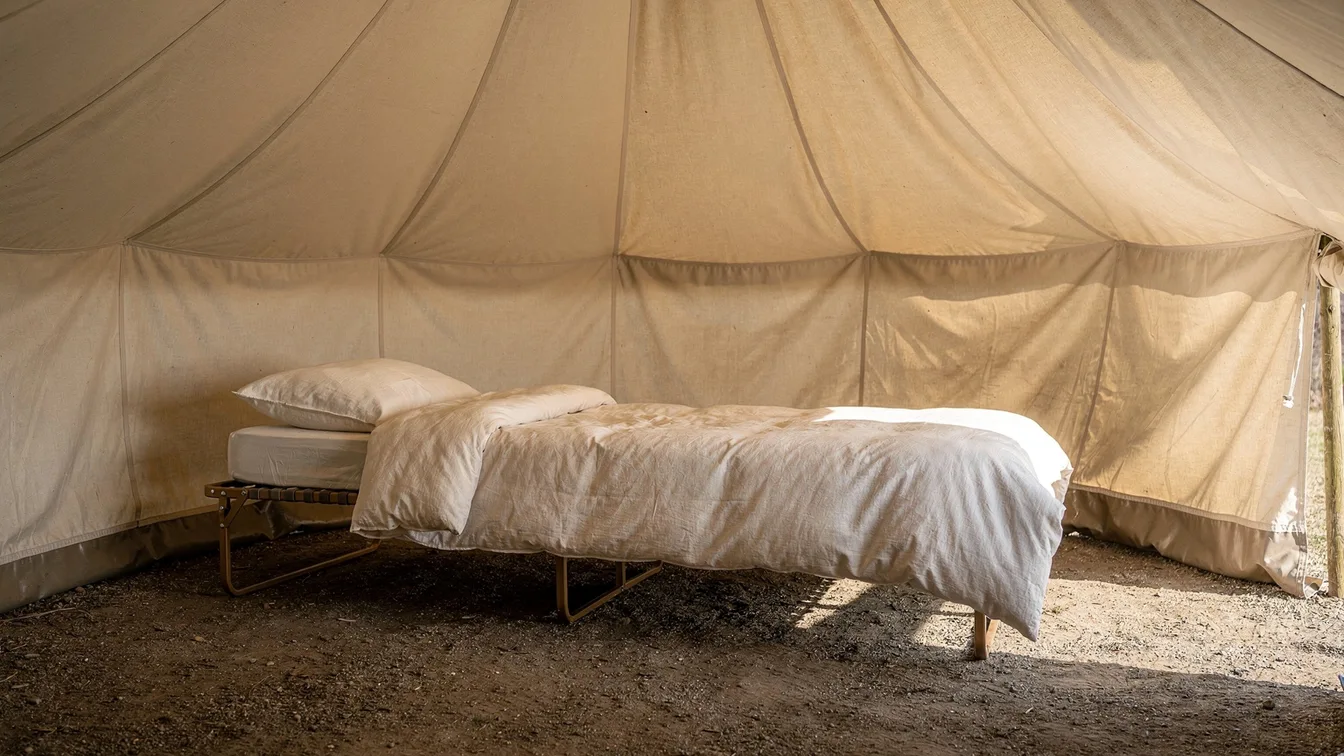
The short answer
Choose a glamping bed by support and insulation, with space to move in the tent. A pad stays low, a cot raises the bed and an air mattress adds space. Check the complete kit against your forecast.
Guide sections 28
- 1. EXPED MegaMat
- 2. Helinox Cot One Convertible
- 3. Intex Downy Queen Air Mattress
- Factors to consider when choosing a glamping bed
- Support and insulation solve different needs
- Measure the usable height above a raised bed
- Choose a single or shared sleeping surface
- Bed length is different from a size label
- A cot needs a floor and frame check
- An air bed needs a pump plan
- Protect the sleeping surface from damage
- Check the night covering with the surface
- Getting in and out of the bed matters
- Children and extra sleeping places need a separate check
- Keep the night light within reach
- Reserve a place for clothes and shoes
- Cold-night planning without an improvised heater
- Hot nights need a room and bed plan too
- Test the full layout before a personal camp
- Compare packed handling in the vehicle
- Dry and clean the system after the trip
- A prepared glamping room changes what you buy
- Use a cabin when the room requirement is the main issue
- Glamping bed value over the trips you will take
- Do a dressed-bed trial at home
- Sources and date checks
- FAQ
- Verdict on Glamping bed choices
Our top 3 picks
- #1Insulated floor bed
 EXPED MegaMat
 - 10-centimeter foam core
- Self-inflating camping mat
- Three single-person size options
Keep in mind: A floor pad stays low; compare its selected width with the tent layout.
View on Amazon Read our analysis - #2Raised sleeping surface
 Helinox Cot One Convertible
 - 75 by 26-inch sleep surface
- 6.5-inch standard height
- 320-pound stated capacity
Keep in mind: The frame provides support, so plan a suitable insulated layer separately.
View on Amazon Read our analysis - #3Larger air bed
 Intex Downy Queen Air Mattress
 - 10-inch air-mattress height
- Queen format
- Pump purchased separately
Keep in mind: This is an uninsulated air bed; add a suitable pump and sleep layers.
View on Amazon Read our analysis
A glamping bed should make the whole night work: comfortable support, suitable insulation, enough room to move and a setup you can transport. A thick or high mattress is not a complete sleep system on its own. Start with the exact tent floor and the expected night conditions.
This guide compares three sleep setups and the practical checks around them. It uses published sleep-system guidance for factual principles, with no invented product scores or medical promises. Check the exact dimensions and limits, plus care instructions of any bed or pad you choose.
1. EXPED MegaMat
Our verdict:
Insulated floor bed
Choose the foam-filled pad when a low sleeping surface suits your tent.
View on Amazon- 10-centimeter foam core
- Self-inflating camping mat
- Three single-person size options
Keep in mind: A floor pad stays low; compare its selected width with the tent layout.
Product details checked October 2026
Choose the foam-filled pad when a low sleeping surface suits your tent.
A sleeping pad combines a sleeping surface with a listed insulation value when the exact model provides one. REI explains R-value as the measure used to compare pad insulation. Higher support or a thicker-looking surface should not be used as a substitute for that field.
Choose the width and length for the sleeper. Then check the tent's floor shape. A pad can leave more usable height under sloping walls than a raised cot. It also needs a clear route around bags and the door.
Check inflation and deflation, plus repair needs for the model. Some pads use air, some include foam and some use a different setup. Read the exact instructions rather than treating every camping pad as the same product.
2. Helinox Cot One Convertible
Our verdict:
Raised sleeping surface
Choose the cot when getting off the ground matters more than a soft mattress.
View on Amazon- 75 by 26-inch sleep surface
- 6.5-inch standard height
- 320-pound stated capacity
Keep in mind: The frame provides support, so plan a suitable insulated layer separately.
Product details checked October 2026
Choose the cot when getting off the ground matters more than a soft mattress.
A cot raises the sleeping surface and can make getting up feel more familiar. Check its exact height and width and length, plus weight limit, then lay those dimensions into the tent. Sloping walls can reduce clearance above a raised bed even when the floor seems large.
The frame and fabric supply support, while warmth depends on the whole setup. Compare the pad or mattress used with it and the covering above. Do not treat the air gap beneath a cot as a published insulation rating.
Check how the feet contact the groundsheet and follow both bed and tent instructions. Keep the cot clear of the pole and doorway. Packed length, assembly work and storage can matter as much as sleeping height on a repeated car-camping trip.
3. Intex Downy Queen Air Mattress
Intex Downy Queen Air Mattress
Our verdict:
Larger air bed
Choose the queen air mattress when your shelter has room for a larger sleep surface.
View on Amazon- 10-inch air-mattress height
- Queen format
- Pump purchased separately
Keep in mind: This is an uninsulated air bed; add a suitable pump and sleep layers.
Product details checked October 2026
Choose the queen air mattress when your shelter has room for a larger sleep surface.
An air mattress can offer a larger sleep surface. But the height and width must fit the exact shelter. Check its stated measurements rather than the common bed-size name alone. Leave a clear entrance route after it is inflated.
Read the inflation method, required pump and power setup. A prepared room's outlet may not suit every device you bring. Keep a way to handle deflation or damage that matches the exact model and trip.
Check whether the product states a relevant insulation rating or use limit. A thick air chamber does not always match an insulated camping pad. Choose the covering and surface together for the exact forecast.
Factors to consider when choosing a glamping bed
Draw the tent floor and the bed at their stated dimensions. Mark the pole and doorway, plus storage area. Then leave a usable path between the sleeper and the exit. A large diameter or person rating cannot settle that layout by itself.
Check the inside shape rather than the outside silhouette. A bed placed near the edge of a bell or dome-style tent sits under a sloping wall. Raising the bed can reduce clearance above the sleeper even when its feet fit the floor.
Use a practice setup before the first trip where possible. Put bags and shoes in their intended positions too. A clear layout with the real gear gives you a better decision than a photograph of an empty tent.
Support and insulation solve different needs
Support describes how the sleeping surface holds you, while insulation limits heat transfer through the system. They should remain separate fields in the comparison. A raised frame, thick cover or soft top does not show the warmth of the bed beneath you.
Use the exact pad's published insulation field where available and read its instructions. REI explains that R-value is used for sleeping-pad insulation. Avoid assigning an assumed rating to a household air mattress or cot that does not state one.
Choose the surface and pad, plus covering for the whole night forecast. A pleasant daytime room image cannot tell you how that combination will feel after dark. When a key field is missing, check the model details before relying on it.
Measure the usable height above a raised bed
Peak height tells you the tallest part of a tent. It does not describe the space above every bed position. A cot near the edge can put the sleeper into the wall slope, while a floor pad leaves more vertical room in the same place.
Mark bed height in the practice layout. Check sitting up, changing position and entering the sleeping area. Leave fabric walls clear as the maker requires instead of pressing bedding or furniture against them.
For a pair of beds, check the space between them as well as the perimeter. Keep the pole and door route open. A room is useful when people can move through it at night, not just when the furniture can be placed on the floor.
Choose a single or shared sleeping surface
Decide whether a shared mattress fits the way the sleepers use the room. A larger surface can give a familiar setup but take more floor space. Separate pads or cots let you place each bed around the pole and doorway.
Check each person's needs and the exact product limits. Do not use the tent's maximum occupant rating as a promise that a large shared bed will fit with bags. The rating often describes close sleeping-pad placement rather than furnished room use.
Keep the choice tied to the trip. A pair of compact pads can be easier to pack, while a shared mattress may suit a longer car camp. Neither setup is a universal winner. The useful one fits the sleepers and the shelter.
Bed length is different from a size label
Read the product's stated usable length and width. A common size name can help you search. But the exact measurements decide fit. Check whether tapered edges, raised side panels or a frame reduce the usable sleep area.
Place the sleeper's gear beside those measurements and leave room for a pillow or the intended covering. Keep the door clear and account for any tent pole. A bed that fits diagonally can still create an awkward walking route.
Check the fully assembled or inflated size as well as the packed one. They answer different tasks. A compact bag may open into a bed too large for the pitch or room you booked.
A cot needs a floor and frame check
Read the cot's stated weight limit and assembly instructions for the exact model. Make sure all feet and supports are seated correctly. Do not use a general category description as proof of a exact frame's limits.
Check how the feet sit on the tent floor and follow the shelter instructions. A bed can put pressure at a few contact points rather than across the whole surface. Use only the floor protection or setup permitted by the makers.
Keep the frame clear of the central pole and wall. A large cot can catch on the room layout even when its nominal length fits. Try the complete setup before traveling instead of discovering that problem at a late arrival.
An air bed needs a pump plan
Check the inflation method and whether a pump is included or separate. Match the pump to the valve and power needed by the exact bed. A charged device is useful only when the connectors and setup fit it.
For a prepared room, ask what electrical gear is allowed. Do not assume a charging outlet supports every pump or appliance. Keep inflation noise and timing in mind when sharing a campground with others.
Plan deflation and packing as well. A bed that is slow to pack can make an early checkout rushed. Read the instructions and try the sequence at home so that the first trip is not the first time you learn the valve system.
Protect the sleeping surface from damage
Read the maker's care and repair details. Keep sharp items and loose gear away from an air-filled surface. Check the tent floor before arranging beds and follow the product instructions for use on that surface.
Carry any repair item that is suitable to the exact model and your route. A generic patch kit may not match every material or valve. Do not claim a repair will work without reading its compatibility and instructions.
Keep an alternative sleep pla suitable for the trip. That may mean a compatible backup layer, a different room category or a simpler site. The plan should be practical for the exact people traveling, rather than an invented emergency fix.
Check the night covering with the surface
Choose the covering for the expected night and the sleeping surface beneath it. A duvet and blanket, plus sleeping bag serve different packing and layout needs. Check the exact product guidance instead of using thickness in a photo as the only measure.
For a prepared stay, check which bedding is supplied to every bed. Extra cots can have a different package from the main mattress. If you need a personal layer, pack it deliberately rather than carrying a complete duplicate set.
Keep the cover off wet gear and use a dry sleep change. Comfort comes from the whole system and the way it is handled. A soft top cannot resolve damp clothing spread over the bed.
Getting in and out of the bed matters
Choose a bed height and layout that the traveler can use. A low pad may be simple to pack while being less suitable for someone who has difficulty getting off the floor. A cot can change that movement but needs more height and floor clearance.
Try the setup with the person using it before travel where possible. Check the route to the door and bathroom at night. Bags and shoes should not fill the space needed to stand or turn.
For a prepared room, ask about the exact bed height and path if those are key details. A general accessible category cannot replace the specific features a traveler needs. Keep the whole night routine in the choice.
Children and extra sleeping places need a separate check
Read the exact age and occupancy, plus bed setups for a prepared unit. A room can advertise a group capacity through extra cots or other spaces rather than equivalent beds. Make sure each place suits the person using it.
For your own setup, follow the product's age and use instructions. Keep children clear of frame mechanisms and a blocked exit. Do not assume a large shared air mattress solves every family's sleeping needs.
Leave enough room to reach the sleeping places without climbing over gear. A tidy practice layout can reveal whether two smaller beds work better than one large one. Choose the setup for the exact group rather than the biggest stated capacity.
Keep the night light within reach
Put a personal light where the sleeper can find it without moving bags or leaving the bed. A fixed tent lamp may not serve the route to a separate bathroom. Check batteries or charging before arrival.
Use a modest level of light for the task and respect site rules and neighbours. More brightness is not always a better sleep environment. Keep cables and lights away from the door path and use them as instructed.
For several beds, make the routine clear for each person. The useful setup is easy to operate when someone wakes in the night. A decorative lighting setup should not make the main task harder.
Reserve a place for clothes and shoes
Choose a small storage position beside the sleeping area that leaves the exit clear. Keep clean sleep items away from used footwear and wet outdoor layers. A container or separate bag can be enough without bringing a large storage system.
Ask where damp gear can dry in a prepared room. Do not spread it across bedding because there is no other plan. For a personal camp, account for that space when drawing the bed layout.
Leave the morning packing route clear too. A large bed filling the entire floor can make bags and shoes difficult to handle. A slightly smaller setup may be more useful when you need to move through the room.
Cold-night planning without an improvised heater
Check the forecast and the listed sleep system before departure. Check the room's installed heat where it is part of the booking. A cot or mattress or fabric room does not always supply a suitable cold-night setup.
Keep fuel-burning cooking devices out of enclosed sleeping spaces. The CDC warns about carbon monoxide from these uses. A grill is not a tent heater, and a stove-jack feature is only part of a separately specified setup.
If the booked or owned setup does not fit the expected night, choose a suitable room or date instead of improvising a device. The bed decision should solve sleep within the available shelter and instructions.
Hot nights need a room and bed plan too
Ask how the room ventilates and what cooling is installed. A prepared bed in a fabric shelter does not show a cool night. Fans, screens and air conditioning are different setups.
Check how bedding can be adjusted while remaining useful for the expected conditions. Keep a dry change and avoid filling the room with layers you will not use. A large bed can also reduce the open space around it.
Choose the room itself when reliable indoor cooling is key. A different mattress cannot solve every climate-control need. The shelter and airflow, plus sleep covering should be considered together for the group.
Test the full layout before a personal camp
Pitch the tent and set up the complete bed setup at home where possible. Include bags and lights, plus the route to the door. Try the pump or frame assembly and check that all required parts are present.
Use that practice to make one change at a time. Move the bed if it crowds the pole, reduce luggage if it blocks the path, or choose a smaller surface if the room becomes hard to use. The point is a usable night routine.
A practice pitch also shows the packing and drying work that follows the trip. It can be a better reason to choose a smaller system than a difference in a gallery photo.
Compare packed handling in the vehicle
Read the packed measurements and kit weight for each exact product. A cot can have a long folded package, while an air bed may require a pump and extra power items. Count the whole system rather than one bag.
Check the vehicle layout with the tent and other essentials included. A bed that fits alone may crowd the gear needed for the stay. Keep the luggage carry from parking in view as well.
Choose the system you can manage at arrival and packing time. Repeated car camps and a single short break may justify different amounts of gear. A larger sleeping surface is useful only when the handling plan works.
Dry and clean the system after the trip
Follow the exact maker's cleaning and storage instructions. Make sure damp gear is handled before it becomes long-term storage. A pad and cot, plus air mattress can need different valve or fabric or frame care.
Keep the bed and covering dry separately from the tent where needed. A wet camp can leave several layers to dry at home. Plan that space before buying a large system, especially if storage is limited.
Use care items that are compatible with the product. Avoid treating a generic household cleaner as suitable for every camping material. Fewer large layers can reduce after-trip work while still providing a comfortable sleep setup.
A prepared glamping room changes what you buy
Ask for the exact bed and bedding inventory before purchasing a personal setup. If the room supplies suitable beds, adding a large mattress creates duplicate work. Check any extra sleeping places separately from the main bed.
Check the bathroom path, installed heat or cooling and dry-space setups. Those room features may change sleep more than a new personal blanket. Keep key needs written down before comparing optional accessories.
For one prepared stay, a personal light and a dry sleep layer may be all that remains. Buy gear for repeated personal camping only when those trips are part of the plan.
Use a cabin when the room requirement is the main issue
A bed inside a tent cannot resolve every access or weather concern. If an indoor bathroom, a level route or reliable temperature gear is key, compare a room that supplies those features directly.
A cabin can still support outdoor days. Read its exact features, since rustic units vary. Hard walls alone do not show a kitchen or private bathroom. But the right unit can simplify the night routine.
Keep the same region and dates, plus party in the comparison. That shows the room-feature trade-off more clearly than changing the whole trip whenever you see a lower rate. Choose the room and bed as one useful package.
Glamping bed value over the trips you will take
Count the full system: bed or pad, required pump and covering, plus any compatible care items. Include the storage and handling work too. A low price for one component can leave several other needs unsolved.
For occasional trips, borrowed suitable gear or a prepared room may fit better than a large new purchase. Try borrowed items together before departure and check their instructions and condition.
For repeated camps, choose the system that you can pitch, sleep on and maintain consistently. The best value comes from useful nights with manageable work, rather than an unverified claim that one product is best for everyone.
Do a dressed-bed trial at home
Test the bed with the sheets and night layers you intend to take. Lie down, turn over and get up from the side you will use in the tent. Check whether a sheet pulls the pad out of place or whether the cot frame presses through the bedding. Keep the light and shoes within easy reach.
Then pack the full setup. Include the pump, repair items and bags, not just the sleeping surface. This trial shows whether the complete kit fits the car and whether one person can move it. It cannot prove weather performance. So still use the product's temperature and care guidance for the trip.
Sources and date checks
REI: choosing sleeping pads: pad insulation and sleep-system selection.
REI: choosing a camping tent: capacity and shelter-selection principles, not an exact model review.
REI: tent care and storage: practice pitching, suitable cleaning and thorough drying before storage.
REI: camping checklist: camping kit categories. Prepared rooms need their own supplied-items check.
CDC: carbon monoxide prevention: fuel-burning devices must not be used in enclosed tents.
Source pages checked 14 October 2026. Access notes can change before your trip. Follow the linked agency or maker instructions for your dates.
FAQ
Does a high air mattress guarantee a warm night?
Height and a thick-looking air chamber do not show a published insulation value. Check the exact mattress or pad details and consider the whole surface-and-covering setup for the forecast. A cot or large air bed can offer support without the same thermal field as an insulated camping pad.
Is a cot always easier than a floor pad?
A cot raises the sleeping surface, which can help some travelers get up. It also needs suitable floor contact and more clearance under sloping tent walls. A low pad may be easier to pack but harder for someone to use. Try the exact setup with the sleeper and shelter before deciding.
Should I use the tent person rating to buy a bed?
Use a full layout instead. Person ratings often describe sleeping pads close together, while raised beds and air mattresses need their own space. Mark the pole and door, plus bags with the bed at its stated dimensions. Leave a clear route and check usable height where the sleeper will sit up.
Verdict on Glamping bed choices
Choose a glamping bed by support and insulation, with space to move in the tent. A pad stays low, a cot raises the bed and an air mattress adds space. Check the complete kit against your forecast.
Build the rest of your trip
Use these routes to check the wider area or plan what to bring.